
Sprout / The what if issue
If MrBeast started
all over again at 13.What business would he build?
No fame. No giant budget. Just one wildly good idea.
Let’s imagine what comes next.
Lemonade Lab Editorial Team
The thought experiment
He would sell the moment you tell your friends about.
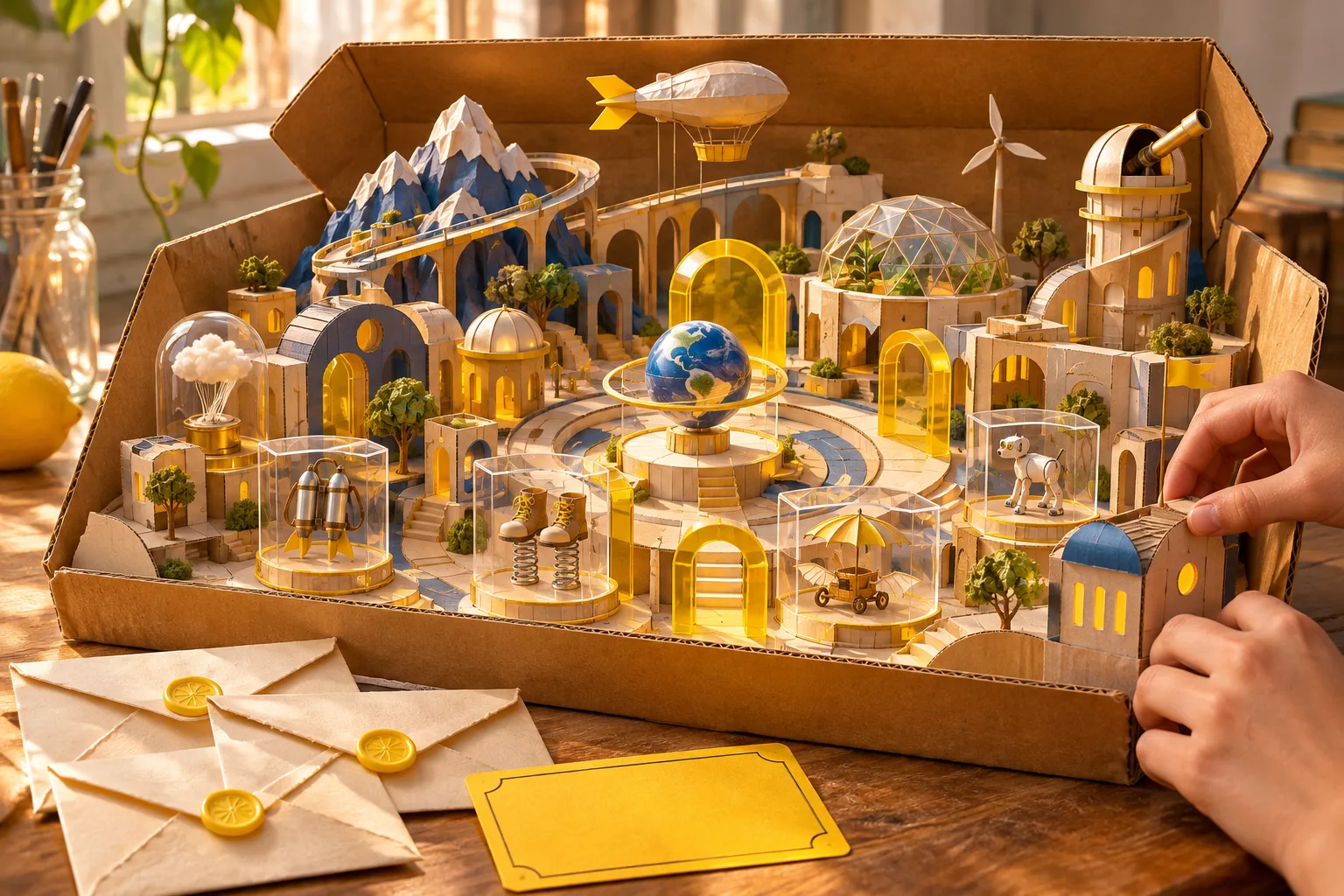
Imagine the reset button actually worked. MrBeast is 13 again. No famous name. No giant production team. No pile of money. Just a table, some cardboard, a phone he has permission to use, and an idea that sounds slightly ridiculous.
What business would he build?
Our bet: The Plot Twist Studio. A shop that turns ordinary afternoons into tiny, extraordinary adventures. Customers could buy a secret mission, a miniature world or a story that arrives inside an envelope. Each product would be interesting to watch being made and genuinely fun to use.
This is our imagined answer, not his business plan. MrBeast has not contributed to or endorsed this article, these ideas or Lemonade Lab.
Why this idea fits the pattern
MrBeast’s official story describes starting on YouTube at 13, experimenting for years and putting earnings back into bigger projects. The useful pattern is testing an idea, noticing what holds attention and improving the next version.
Our interpretation: at 13, he could apply that pattern to a product people can experience themselves. A short demonstration earns curiosity. A good product earns trust. A new chapter gives happy customers a reason to return.
You do not need an audience to test that. Show one prototype to someone you know. Can they explain what it does? Do they want to try it? Would they choose to buy it at a price that covers your work?
Make the idea enormous.
Make the first version small.
Seven wonderfully unreasonable starting points
Big enough to make you stop scrolling. Small enough to start.
These are imaginative concepts, not claims of inventions nobody has ever considered. The opportunity is in your particular characters, rules, craft and customer experience.
The Museum of Almost
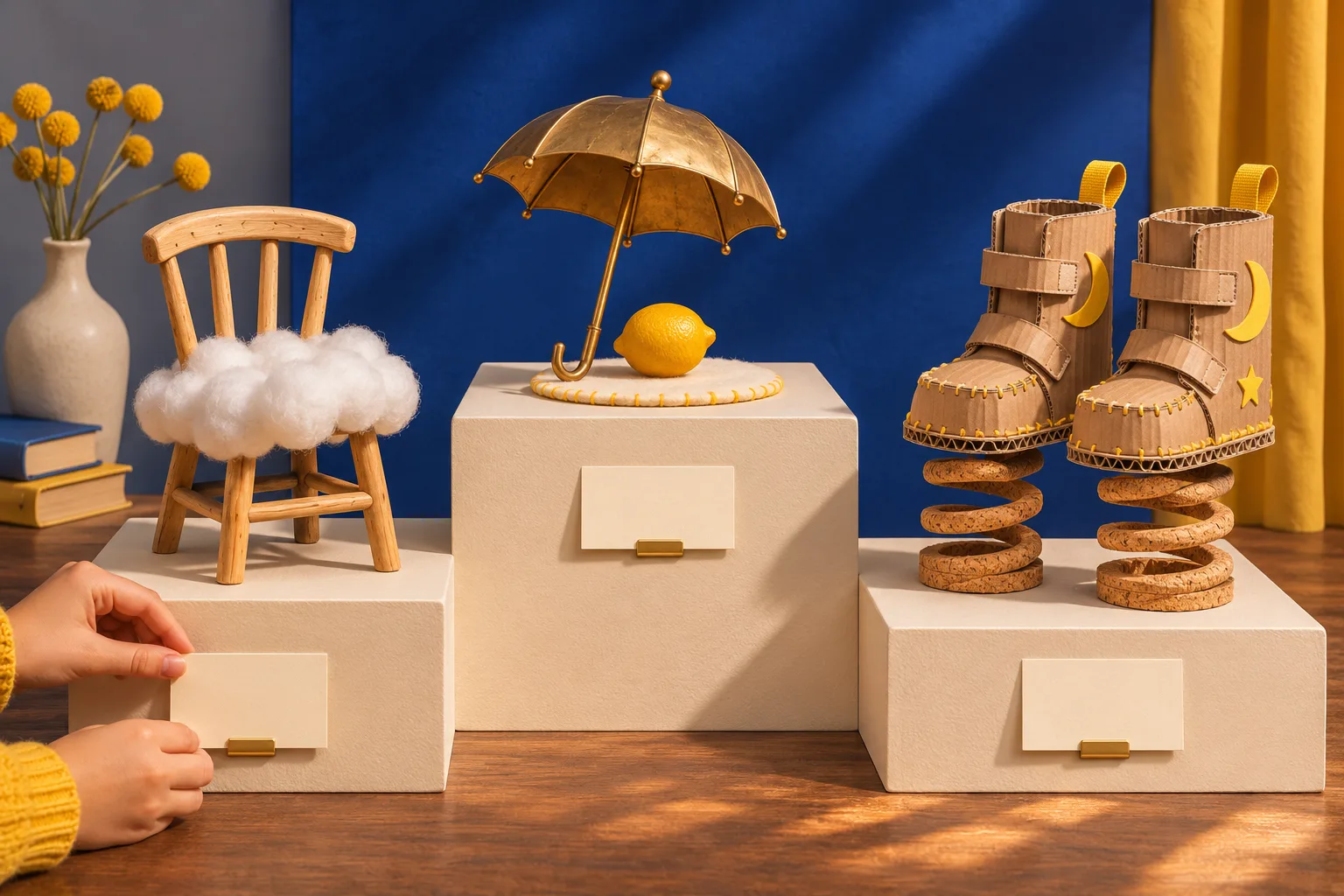
A grand museum for tiny inventions that hilariously failed. A chair for a cloud. An umbrella for a lemon. Moon boots that have never left the desk. Each sculpture comes with a fictional inventor’s story, the reason it failed and a challenge to improve it.
What you sell: an original miniature display or a printable museum kit. Buyers choose the exact exhibit, so the surprise comes from the story.
First customer: someone looking for an unusual desk gift, or a family who likes making things together.
Start here: make one cardboard exhibit with a funny, honest label. Ask someone to invent a better version. If that part is fun, you have the beginning of a product.
The Department of Tiny Plot Twists
A birthday card arrives with a very serious assignment: the cake has lost its identity. Three paper clues lead to a secret name, a ridiculous character and the final birthday message. The gift is the story someone gets to step into.
What you sell: a complete printable adventure with clues, instructions, a solution and a custom final card. Make the contents and length clear before purchase.
First customer: a parent planning a birthday at home.
Start here: write a ten minute adventure using three envelopes. Have a family member test it without hints. Rewrite every confusing clue.
A Pocket Planet With a Very Specific Problem
One planet has outlawed Tuesdays. Another has a moon that keeps borrowing everyone’s socks. Your customer gets a folded paper world, its peculiar problem and three possible endings. They choose how the story continues.
What you sell: a paper model with original characters and a playable story. Later chapters are optional, clearly described purchases.
First customer: someone who enjoys model making, storytelling or imaginative gifts.
Start here: draw one foldable planet. Give it one strange rule and one satisfying ending. Make sure the original pack feels complete on its own.
The Bureau of Unreasonably Small Victories
You finally learned the tricky chord. You finished your first comic. Your plant produced a leaf. Clearly, this calls for a ceremony far more dramatic than the occasion requires.
What you sell: a personalised mini celebration kit: a paper trophy, an original announcement and a short ceremony script. Think “Historic Leaf Arrival,” delivered with complete seriousness.
First customer: a family member, music teacher or club leader celebrating somebody’s effort.
Start here: invent a ceremony for one real achievement. Show the recipient privately. Ask whether it feels funny and kind. Nobody should have to appear in a video.
Tomorrow’s Archaeology Shop
A museum from the year 3026 has misunderstood the objects of today. A pencil becomes an ancient idea antenna. A paperclip becomes a ceremonial cloud hook. You create the fictional exhibit, its wildly incorrect explanation and a puzzle that reveals the truth.
What you sell: original illustrated exhibit cards or small handmade display sets. Clearly label the stories as fiction.
First customer: a puzzle fan, a teacher choosing a creative activity or a friend who likes odd gifts.
Start here: choose one safe household object. Write its future museum label. Can a tester guess the object from your invented clues?
The Boredom Forecast
“A patch of extreme ordinary is moving into the living room. Expect scattered yawns.” Your shop issues fictional weather reports for boring afternoons, each followed by a creative mission that changes the forecast.
What you sell: themed activity decks. One might turn scrap paper into an alien hotel. Another challenges a family to invent a sport played entirely with drawings.
First customer: a family looking for a screen free afternoon.
Start here: make five missions using materials people already have. Test the setup time, the instructions and whether anyone wants to play again.
The World That Ships Inside Its Own Box
The shipping box is also the product. Unfold it and a tiny town appears. The packing paper becomes a river. The thank you card becomes the mayor. Even the receipt has a fictional job at the town hall.
What you sell: a complete foldout paper world, or a downloadable template someone can build from their own clean cardboard.
First customer: a maker, a family or someone buying a thoughtful creative gift.
Start here: build one corner of the town. Make it easy to assemble. Photograph the transformation from ordinary box to extraordinary place.
From wild idea to real offer
The first sale is the useful experiment.
A clever name is a starting point. Your first product needs a clear customer, an understandable promise and a version you can actually deliver.
- Choose one moment. A rainy afternoon. A birthday. A small achievement. Specific moments make it easier to explain why someone would want your product.
- Build the smallest complete version. One exhibit, one mission or one planet. It should feel finished, even if it is small.
- Test it with someone you know. Watch where they get stuck. Ask what they would change. A compliment is useful feedback, but it is not proof someone will buy.
- Put the offer in your shop. Show your own photos. Explain exactly what is included, the price and when the buyer will receive it.
- Improve what happens after the sale. Clear instructions, careful packaging and reliable delivery give a surprising idea a chance to become a good business.
Before choosing a price, count materials, packaging, relevant fees, delivery costs and your time. A printable also takes time to design and support. Use the young founder pricing guide, then check current Lemonade Lab plans and fees.
Let the idea be outrageous. Keep the experiment sensible. Use your own characters and artwork. Ask a parent or guardian to help with permissions, payments and any in person arrangements. Never share your home address, school or another person’s image in a public demonstration.
What should a 13 year old actually build?
Something small enough to finish and interesting enough that you want to improve it. It does not have to become famous. One happy customer teaches you more about your offer than a hundred imagined followers.
Our fictional MrBeast restart would begin with The Plot Twist Studio because the product and the story make each other more interesting. Your version should come from the things you love making, playing or explaining.
You have watched other people build extraordinary things. Now make the first small version of yours.
A few things you might be wondering
Did MrBeast actually start YouTube at 13?
His official brand story describes starting on YouTube at 13. This article uses that starting point for a hypothetical business exercise. It does not claim he plans to launch any of these ideas.
Do I need followers or expensive equipment?
You can test these concepts with paper, materials you already have and people you know. Start with a clear product and useful feedback. An audience, sales or earnings are not guaranteed.
How do I start on Lemonade Lab?
Use the idea generator below, copy your plan and open Lemonade Lab. Follow the normal account setup and required parent approvals. Then use Spark to develop your idea and shop. A generated plan is a starting point, not a published shop.
Is Lemonade Lab connected to MrBeast?
No partnership or endorsement is claimed. This is independent editorial commentary. The concepts and custom artwork were created for this article.
Your turn
Give your idea
a plot twist.
Two choices. One unexpected shop idea.
Your first move, already worked out.
Your possible next big thing CONCEPT 05
The Plot Twist Studio
An ordinary envelope becomes the start of an extraordinary mission.
- The offer
- A printable adventure with three clues, a solution and a surprise final message.
- The customer
- Parents planning a birthday at home.
Write a ten minute mystery using three envelopes. Test every clue with a family member.
Copy your plan, then paste it into Spark when you start on Lemonade Lab.
Original starting points to make your own. Account setup and parent approvals still apply. Plans and fees.
Keep building