

How to Get Your First Customer as a Kid
Starting a business feels exciting right up until the moment when somebody has to buy something. Before that point, almost every decision is under the creator’s control. You can choose the name, colors, product, price, and shop. A customer changes the situation because they are allowed to be confused, uninterested, busy, price-sensitive, or simply not the right person for what you made.
That is why the first customer matters so much. The first sale is not important because of the amount of money. It is important because it is the first evidence that an offer created enough value for another person to act.
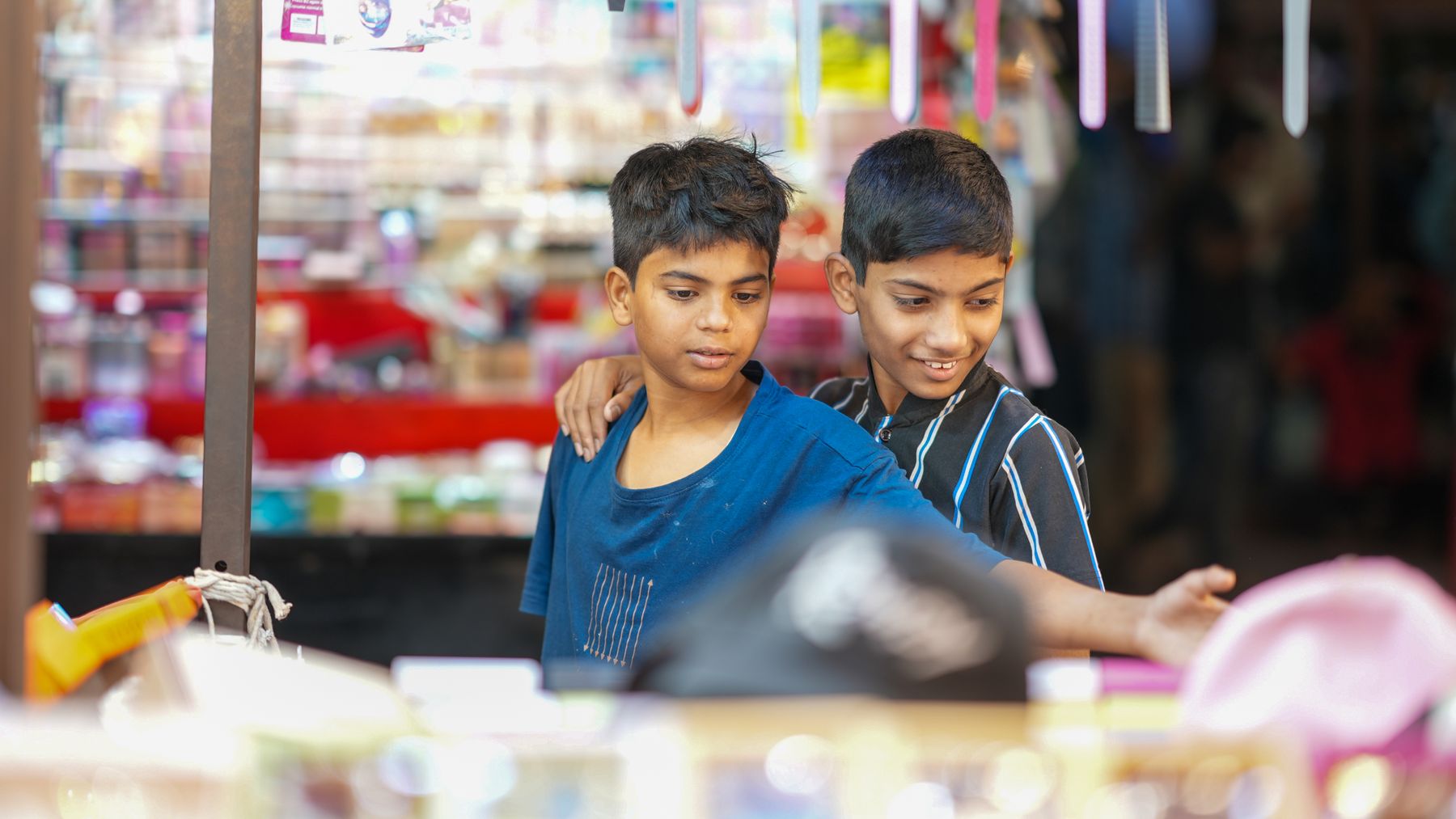
For kids, finding that customer should also happen inside appropriate boundaries. Parents and guardians should decide where the business can be promoted, which customers are appropriate, how communication works, and whether an adult needs to be present. A first customer does not need to be a stranger from the internet. If the business is already built in Lemonade Lab, the steps below can help move from “my shop exists” to “someone understands what I sell and wants it.”
Make Sure You Have an Offer, Not Just a Business
“I started a bracelet business” is not an offer. Neither is “I make art” or “I do yard work.” Those statements describe a category, but they do not give a customer enough information to decide.
A first offer should answer four things: what is it, who is it for, what does it cost, and what happens next? For example: “I am making personalized friendship bracelets in three colors for $6 and taking five orders this week.” Or: “I am offering 30-minute reading-practice sessions for younger students, with our parents arranging the time.”
Clarity makes selling less awkward because the kid is not asking someone to support a vague dream. They are offering a specific thing.
Start With the Safest Warm Network
The first potential customers are usually people connected to the family: relatives, family friends, trusted neighbors, parents’ coworkers where appropriate, or people at a parent-approved school or community event. That is not “cheating.” New businesses of every size often begin with warm networks because trust already exists. For a kid, the safety advantage makes that starting point even more important.
Parents should supervise how the offer is shared and avoid publishing a child’s private contact information. If the business later reaches a wider audience, use systems designed to protect the child’s identity and communication rather than giving unknown adults direct access to the child. Lemonade Lab’s parent safety guide explains its approach to customer communication, privacy, payments, shipping, and parent visibility.
Make a List of 10 Appropriate People, Not 1,000 Followers
A kid does not need an audience before getting a first customer.
Make a short list of ten people or households who are plausible customers and whom a parent or guardian considers appropriate to contact. “Plausible” matters. If the product is a custom dog portrait, start with people who have dogs. If the service is reading practice, start with families who have younger children and already know the family.
This avoids a common beginner mistake: trying to promote to everyone because the seller has not decided who would actually benefit. Ten relevant people produce better information than a hundred random views.
Ask for the Sale Clearly
Kids can feel uncomfortable asking someone to buy because it sounds like asking for a favor. A clear offer changes the tone.
Instead of “Can you support my business?”, try a simple statement: “I am making five custom bookmarks this week. They are $4 each. Would you like me to make one for you?”
The customer can say yes or no. Both answers are acceptable.
Avoid guilt, pressure, or repeated asking. A good business is trying to find customers who want the offer, not convince every person to prove they are supportive.
Show the Product Whenever Possible
A customer understands a physical or creative product much faster when they can see it. Make a sample, take a clear photo, or show a few finished examples. For services, show what the customer receives: a one-page description, a before-and-after example where appropriate, or a simple explanation of the process.
Proof reduces uncertainty. A kid saying “I make nice bracelets” asks the customer to imagine the result. A photo lets them judge for themselves.
For a first business, the proof does not need to look professionally produced. It needs to be honest and easy to understand.
Use a Small Quantity to Make the First Ask Easier
An unlimited offer can feel abstract. A small batch creates a natural test.
“I am taking five orders this week” tells the customer the business is active now and tells the kid exactly how much work they are committing to. If all five sell, make another batch later. If none sell, the kid has lost very little.
This is especially useful for products that take time to make. The child should not accept 25 custom orders simply because a post unexpectedly gets attention. Capacity comes before growth.
Ask Better Questions When Someone Says No
A “no” is only useful if the kid learns what kind of no it is. Do not interrogate the customer or make them defend the decision. A simple question such as “No problem—was there anything that was unclear about it?” can sometimes reveal useful information.
The person may love the product but not need it. They may think the price is high. They may not understand what makes the custom version different. They may be the wrong customer entirely.
One no proves almost nothing. Several similar responses begin to form a pattern.
Do Not Lower the Price After Every Rejection
New sellers often assume price is the problem because it is the easiest thing to change. Sometimes the price is wrong. But cutting it immediately can hide a different issue. The offer may be unclear, the audience may be wrong, the product may need improvement, or the customer may have no reason to buy now.
Before changing the price, ask whether people understand the value. If a $6 bracelet takes 30 minutes to make and customers will only pay $2, the business may need a faster product, a different customer, or a decision not to sell that item.
The goal is not to make any sale at any price. It is to find a version that works for both customer and creator.
Make the First Buying Experience Easy
Once somebody says yes, remove unnecessary friction. The customer should know exactly what they are ordering, what it costs, when it will be ready, and how the approved payment will work. For a custom product, confirm the important choices. For a service, confirm the time and what is included.
Then deliver when promised. A first customer is valuable because they can become proof for the second. If the experience is easy and the result is good, the family may be comfortable recommending the business to another appropriate customer.
Ask for Feedback After Delivery
After the product or service is complete, ask one or two useful questions instead of a generic “Did you like it?” Try: “What part did you like most?” and “Was there anything you expected to be different?” The answers help improve both the product and the explanation used for future customers.
If the customer volunteers a positive comment and the parent is comfortable with it, ask whether the business can use that feedback without sharing private information. Do not publish names, photos, or identifying details without proper permission. Early proof should not come at the expense of privacy.
Turn Customer One Into Customer Two
The easiest next step may be a referral, but it should be handled appropriately for the child’s age. A parent can help ask the first customer whether they know another family who might genuinely want the product or service. The customer can make the introduction rather than giving the child a stranger’s contact information.
This keeps the connection warm and supervised. The kid should still make the offer themselves as much as possible. The learning comes from explaining the business, answering questions, and hearing the response.
Use Markets and Events for Fast Feedback
A parent-approved community market, school event where selling is allowed, or small neighborhood market can create many customer interactions in a short period. The kid can learn from what people do: which products they pick up, what they ask, where they hesitate, and which signs make sense. That is difficult to reproduce by showing the idea only to close relatives.
For supported in-person payments on compatible devices, the Lemonade Lab Payment App can help eligible businesses accept contactless payments rather than losing a sale because a customer has no cash. Even at an event, adult supervision and local rules still matter. The child should not be left to handle unknown adults, money, or public activity beyond what the parent considers appropriate.
What If the First 10 People Do Not Buy?
Do not immediately conclude the business failed.
Review the evidence in order. Did the ten people actually match the target customer? Did they understand the offer? Did they see a good example? Was the price clear? Was there a reason to buy now? Did the kid make a direct ask, or only mention that the business exists?
Then choose one variable to change.
If customers are confused, rewrite the offer. If the wrong people were asked, find a better-approved audience. If the product looks unfinished, improve the sample. If multiple likely customers say the price feels too high, test a different price or simpler version.
Changing everything at once makes it impossible to know what helped.
A Seven-Day First-Customer Plan
A kid can make the process manageable by spreading it across a week.
Day 1: Choose one product or service and write the offer in one sentence.
Day 2: Create or photograph a sample.
Day 3: With a parent or guardian, list ten appropriate potential customers.
Day 4: Share the offer with the first three.
Day 5: Share it with three more and write down common questions.
Day 6: Adjust one thing if the evidence suggests it.
Day 7: Contact the remaining appropriate customers or test the offer at an approved event.
The plan is intentionally small. A first customer usually requires more asking than designing.
What Parents Should Do During the First-Customer Stage
Parents can create access without doing the sale. They can decide which customers are appropriate, make introductions, supervise communication, provide transportation, review public information, and handle payment or online requirements that need an adult. Then they can let the child explain the offer and answer the ordinary business questions.
If the kid freezes, help them prepare rather than taking over permanently. Practice the offer at home. Role-play a customer question. Let the child try again.
The first customer is valuable partly because the kid learns, “I can talk about something I built.”
How Lemonade Lab Helps With the First Sale
A business is easier to explain when customers have somewhere to see it. Lemonade Lab’s How It Works guide shows how young creators can build a shop, add a product or service, choose a price, and share the business. Kids can start for free, so a first-customer test does not need to begin with an expensive ecommerce setup.
The shop does not replace the need to find customers. It gives the kid a real place to send an approved potential customer when the question becomes, “What exactly are you selling?” That is the right role for the tool: make the business easier to operate while the child learns the harder parts.
The First Customer Is a Beginning, Not a Score
A first sale can feel huge. Celebrate it, but do not turn it into a scoreboard.
The more useful questions are what the customer taught the kid and what should change next. Was the product easier or harder to deliver than expected? Did the price make sense after the work was complete? What question came up that the kid was not ready for? Would they want another customer like that one?
A kid who can answer those questions is already moving beyond “I made a sale” toward “I understand my business better.” That is the real value of customer number one.