
Bored After School? 21 Things Kids Can Build, Sell or Start
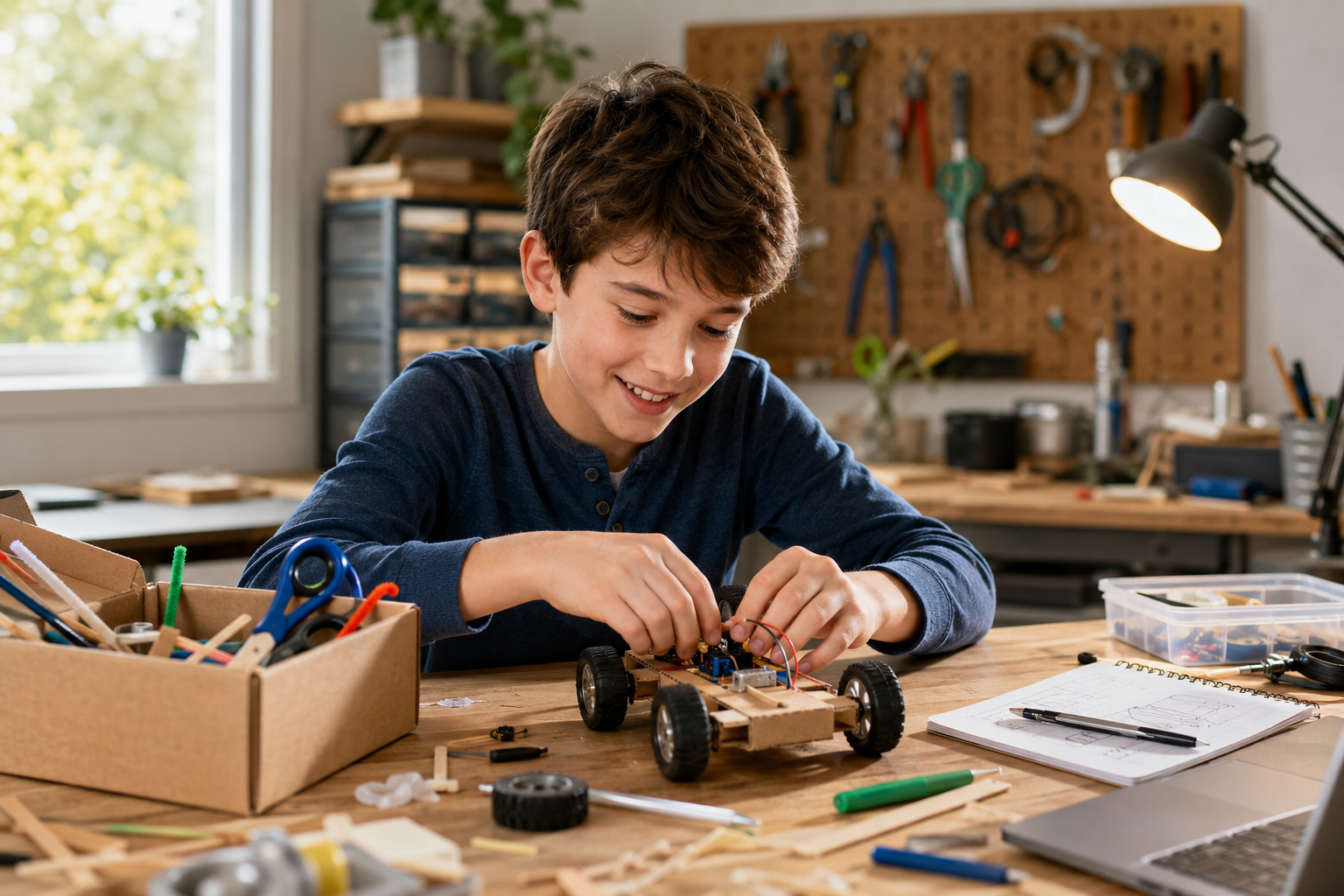
After-school boredom is not always a problem to solve. Sometimes it is empty space that a kid can fill with something they chose themselves.
The projects below are intentionally different from a list of passive activities. Most produce something that can be shown, tested, improved, shared, or even sold. A parent or guardian should still set appropriate boundaries around tools, customer contact, online accounts, payments, travel, and safety.
1. Make three versions of one product
Pick something simple such as a bracelet, bookmark, card, sticker design, keychain, or small craft. Make three versions that differ in one meaningful way: color, size, material, style, or personalization.
Then ask a few people which one they prefer and why. The interesting part is not whether they compliment the work. It is whether they make a choice.
2. Build a cardboard prototype
Before spending money on materials, build a rough version from cardboard, paper, tape, recycled packaging, or whatever is available.
This works for organizers, product displays, simple games, storage ideas, stands, packaging, and plenty of other concepts. A rough model exposes problems while they are still cheap to fix.
3. Create a five-item mini collection
Instead of making random crafts, choose a theme and build five related items. They might share colors, characters, materials, or a common customer.
A collection forces more decisions than a single item. Which products belong together? Which one is the easiest to make? Which one feels like the main item?
4. Photograph something like a product
Choose an ordinary object and try to take a photo that makes it look appealing enough to sell. Experiment with window light, backgrounds, angles, distance, and simple props.
Compare the photos afterward. Product photography quickly teaches that presentation changes how people interpret the exact same object.
5. Invent a service for one annoying problem
Look around home or ask a parent what small recurring task they dislike. Do not immediately volunteer to do it. First turn it into a clear service.
What exactly would you do? What would not be included? How long would it take? What supplies would you need? That exercise turns “helping out” into thinking about an offer.
6. Redesign the packaging for something you own
Take an existing toy, craft, snack container, or household product and imagine better packaging for it. Sketch the shape, opening experience, storage, and what information a customer actually needs.
This is a design project, not an invitation to copy somebody else’s brand. Focus on the practical questions: protection, convenience, waste, and presentation.
7. Run a tiny taste or preference test
With a parent or guardian handling food safety and allergies where food is involved, compare two or three variations of something simple.
The test can also use non-food products: three bookmark styles, two greeting-card designs, or different colors of the same accessory. Record actual choices rather than relying on memory.
8. Make a one-page catalog
Choose a few imaginary or real products and arrange them on one page with a photo or drawing, a name, a price, and the important details.
Then give the page to somebody for ten seconds. Can they tell what is being offered? If not, simplify it.
9. Create a neighborhood problem map
Walk through a parent-approved area with an adult and notice inconveniences. Leaves piling up? Bikes that are always dirty? People carrying groceries? Gardens that need watering during vacations?
Do not approach strangers or promise services. Just collect observations. Entrepreneurship often starts with noticing before it starts with selling.
10. Build the smallest possible version of an idea
If the idea is a giant craft kit, make one tiny sample. If it is a tutoring service, plan one 20-minute practice session. If it is a digital planner, design one useful page.
Starting small makes it much easier to discover whether the idea is enjoyable and useful before investing a weekend in it.
11. Make a simple stop-motion video
Use toys, clay, paper cutouts, or handmade products to create a short stop-motion sequence. Keep it brief enough to finish.
The project combines storytelling, patience, photography, sequencing, and editing. Those skills can later be useful for product demonstrations or creative marketing.
12. Design a better desk organizer
Use cardboard, containers, or other safe materials to build an organizer around the items that actually clutter your desk.
Use it for a few days. What falls over? What is hard to reach? What did you forget to make space for? Improving a design after using it is very different from decorating a project and calling it finished.
13. Create a mini pop-up display
Imagine you had three feet of table space at a market. Set up a display using objects you already own.
Stand several feet away. What do you notice first? Can you tell what is for sale? Can you reach everything? A good display has a job beyond looking pretty.
14. Record a 30-second explanation of an idea
Pick any project and explain it in 30 seconds: what it is, who it is for, and why they might care.
Watch the recording privately with a parent or guardian if appropriate. Notice where the explanation becomes confusing. You do not need to post the video anywhere for the exercise to work.
15. Learn one useful editing skill
Choose one narrow digital skill and practise it for an afternoon: cropping photos well, removing distracting backgrounds, adjusting audio levels, creating a clean slide, or trimming video clips.
A focused skill session is often more satisfying than wandering through tutorials without making anything.
16. Invent and test a simple board game
Create a game with a small number of rules and play it with somebody else. Do not explain what you meant every time the player gets confused. Watch where the rules fail.
Then rewrite them and play again. Few projects demonstrate the difference between what a creator understands and what a customer understands as clearly as a homemade game.
17. Build a homework system you would actually use
Design a one-page planner, subject tracker, backpack checklist, or project board around your own habits.
Use it for a week before deciding whether it is good. If it works, you may have an idea worth adapting for other students.
18. Pick a skill and practise it for seven days
Choose something small enough to repeat daily: drawing icons, tying bracelet patterns, taking product photos, writing descriptions, coding a simple feature, or speaking clearly on camera.
Keep each session short. The goal is to see what seven repetitions do to the quality and speed of your work.
19. Take 20 photos and choose only three
Photograph a pet, object, craft, plant, or outdoor scene 20 different ways. Then choose the best three.
The hard part is not taking more photos. It is developing enough judgment to decide which ones work and explain why.
20. Design something for a younger kid
Create a coloring page, simple game, bookmark, story prompt, organization tool, or other small item for somebody younger than you.
If a parent approves, let a younger sibling or family friend try it. Watch what they do instead of immediately correcting them. Designing for somebody other than yourself requires empathy.
21. Interview an adult about their job
Ask a parent, relative, teacher, coach, or trusted family friend how their work actually works. What problems do they solve? What do customers or coworkers misunderstand? What part takes the most skill?
You may discover business ideas you would never find by searching a list online.
What if the project turns into a business idea?
Do not rush to buy inventory or build a huge brand. Start with a tiny test. Show the idea to a few safe potential customers. Ask what they like, what confuses them, and whether they would actually use or buy it.
If there is real interest, Lemonade Lab gives kids a place to turn a project into a shop with parent or guardian involvement where needed. The How It Works guide explains the path from idea to products, services, pricing, and customers.
The useful outcome of an after-school project is not necessarily a company. A kid might discover that they love photography, hate making the same craft twice, enjoy talking to customers, or want to learn more about design. That is a much better answer to “I’m bored” than another hour of scrolling.